
The Path to Top Universities: A Practical Guide for 9th to 12th Graders - Part 2

Updated: Sep 21
Insider Strategies for College Admissions Success!

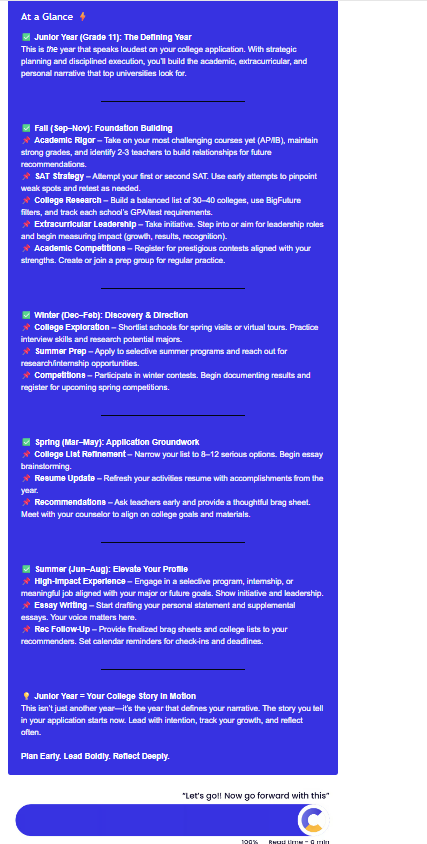
For students aspiring to top universities, Grade 11 (Junior Year) is the defining year. It's the year that showcases academic rigor, leadership, intellectual curiosity, and college readiness. With careful planning and action, it can set the foundation for a stellar application.
Here’s your month-by-month practical roadmap for Junior Year:

JUNIOR YEAR (11th Grade)
▶️ Fall (September-November)
📌 Academic Excellence
Course Rigor: Excel in your most challenging course load yet, including multiple AP/IB courses.
Grade Monitoring: Track your grades meticulously—junior year GPA is often the most heavily weighted.
Teacher Relationships: Identify potential teacher/counsellor recommendation writers and deepen these relationships through meaningful class participation and office hour visits.
📌 Standardized Testing
The SAT plays a vital role in college admissions, especially for students aiming for top universities. While there's no official limit to how many times you can take the SAT, most students benefit from 2-3 attempts.


📌 College Research Intensification
College List Development: Build a balanced list of 30-40 schools across reach, target, and safety categories.
Use the filters on BigFuture (bigfuture.collegeboard.org/college-search/filters) to build your college list based on key preferences like location, courses offered, and more.

Admission Requirements: Research specific requirements for target schools (minimum GPA, test scores, etc.).
Financial Aid Research: Investigate merit scholarship opportunities and financial aid policies.
📌 Extracurricular Leadership
Position Advancement: Take on significant leadership roles in your key activities.
If you're part of your school's debate club in Grade 11, aim to become the Vice-President or President by Grade 12. Alternatively, if you’ve started a blog or podcast on youth issues, take it a step further by leading a small team of peers to expand it into a regular school-wide initiative or newsletter.
Impact Measurement: Begin documenting concrete results of your leadership (membership growth, project outcomes, etc.).
Community Service: Maintain consistent involvement in meaningful service (10-15 hours monthly).
Rather than sporadic volunteering, choose a cause that aligns with your interests — say, education or the environment — and stick with it. For instance, if you’re passionate about education, commit to tutoring underprivileged students every weekend for a year.
📌 Competition Participation
Academic Competitions: Register for prestigious competitions in your areas of strength (Science Olympiad, Math Olympiad, Debate tournaments, Model UN, writing contests, etc.).
Competition Preparation: Develop a structured study plan for competition preparation (1-2 hours weekly).
Team Formation: Join or form study groups for team-based competitions.
Register for prestigious competitions that align with your academic strengths and interests:
STEM: Science Olympiads (INBO, INChO), AMC, Math Kangaroo, Physics Bowl, Technothlon
Humanities: World Scholar’s Cup, Harvard Model Congress, National History Bee
Writing & Literature: John Locke Essay Competition, New York Times Student Editorial Contest, Queen’s Commonwealth Essay Competition
📌 Practical Tips:
Schedule regular meetings with your guidance counselor to ensure you're on track
Start a spreadsheet tracking colleges' specific requirements and admission statistics
Consider taking SAT/ACT in the first three months of the Junior year if not taken early to establish a baseline score
Research past competition winners to understand what judges look for in successful entries
▶️ Winter (December-February)
While keeping up with academics and test prep, don’t forget to start discovering colleges that excite you!
📌 College Exploration
College Visits: List down the colleges you want to visit and use spring break to tour your top-choice campuses. If you're far from your shortlisted schools, take advantage of the virtual tours most colleges offer.

Interviewing Skills: Research and practice college interview techniques.
Major Selection: Narrow down potential major choices based on your academic strengths and career interests.
📌 Summer Planning
Program Applications: Apply for selective summer programs, particularly those related to your intended major.
Check out some of the best Summer Programs here:

Internship/Research Pursuit: Reach out to potential summer internship or research opportunities (aim for 10-15 inquiries).
Application Preparation: Research summer programs focused on college application assistance.
📌 Competition Advancement
Competition Participation: Compete in winter competitions and tournaments.
Results Documentation: Keep detailed records of your participation and any awards/recognitions.
Spring Competition Registration: Register for spring academic competitions that align with your strengths.
▶️ Spring (March-May)
📌 College Application Groundwork
College List Refinement: Narrow your college list to 8-12 schools based on research and visits.
Essay Brainstorming: Begin generating ideas for your personal statement and supplemental essays.
Resume Finalization: Update your activities resume with junior year accomplishments.
📌 Recommendation Preparation
Achievement Documentation: Begin compiling a list of specific examples of your work and contributions in each teacher's class.
Teacher Requests: Formally ask 2-3 teachers for recommendations (provide them with a personal summary sheet).
Counselor Meeting: Schedule a comprehensive meeting with your guidance counselor to discuss your college plans.
Recommendation Materials: Prepare a comprehensive "brag sheet" including:
Specific class contributions and achievements
Challenges you've overcome
Growth you've demonstrated
Personal qualities you'd like highlighted
Future academic and career goals
List of colleges you're applying to with deadlines

▶️ Summer (June-August)
📌 Substantial Summer Experience
Significant Engagement: Participate in a selective program, internship, research, or meaningful employment.

College-Relevant Experience: Pursue activities related to your intended major or career path. Explore AI and emerging technology programs to build relevant skills.
Leadership Demonstration: Seek opportunities to show initiative and leadership in summer positions.
Personal statements and supplemental essays are your chance to show the human behind the numbers.

📌 Recommendation Follow-Up
Materials Delivery: Provide recommenders with your finalized brag sheet, resume, and college list.
Timeline Communication: Create and share a spreadsheet of recommendation deadlines with your recommenders.
Fall Check-In Planning: Schedule early fall check-ins with recommenders to answer any questions.
By the end of Grade 11, take a moment to pause and reflect on your journey so far. Ask yourself: What story does your college application tell about you?
Final Words: Junior Year is a Sprint and a Strategy
The pressure is real—but so is the payoff. Think of this year as the foundation of your future. Every essay, test score, and extracurricular move contributes to a bigger picture: the story of who you are and where you want to go.
Plan early. Execute deliberately. Reflect deeply.


Comments